
Leadership Has Quietly Changed
The job of a CEO looks the same from the outside.
The title.
The responsibility.
The expectation to decide, to lead, to hold it all together.
But the context has shifted — dramatically.
Today’s CEOs are navigating faster cycles, heavier complexity, higher visibility, and thinner margins for error than ever before. The pace hasn’t just increased. The stakes have.
And yet, many CEOs are still trying to lead the way leaders did a generation ago — alone.
The Myth of the Self-Contained Leader
There’s a story we don’t question enough in leadership:
That the CEO should have answers.
That confidence means certainty.
That strength means self-reliance.
But most CEOs will tell you privately:
The higher you go, the fewer places you can think out loud.
Inside the organization, every word carries weight.
Outside of it, discretion matters.
And at the top, there’s no neutral room to process uncertainty.
So leaders adapt.
They filter.
They decide in isolation.
Not because it’s effective — but because it feels expected.
Complexity Exceeds Any One Perspective
No matter how experienced or capable a CEO is, one thing remains true:
No single leader can see the whole picture alone.
Markets shift.
People dynamics evolve.
Decisions carry second- and third-order consequences.
When leaders rely solely on internal data or personal instinct, they risk narrowing their field of vision — especially in moments that matter most.
Perspective is not a luxury in leadership.
It’s a requirement.
Why Peer Thinking Changes Everything
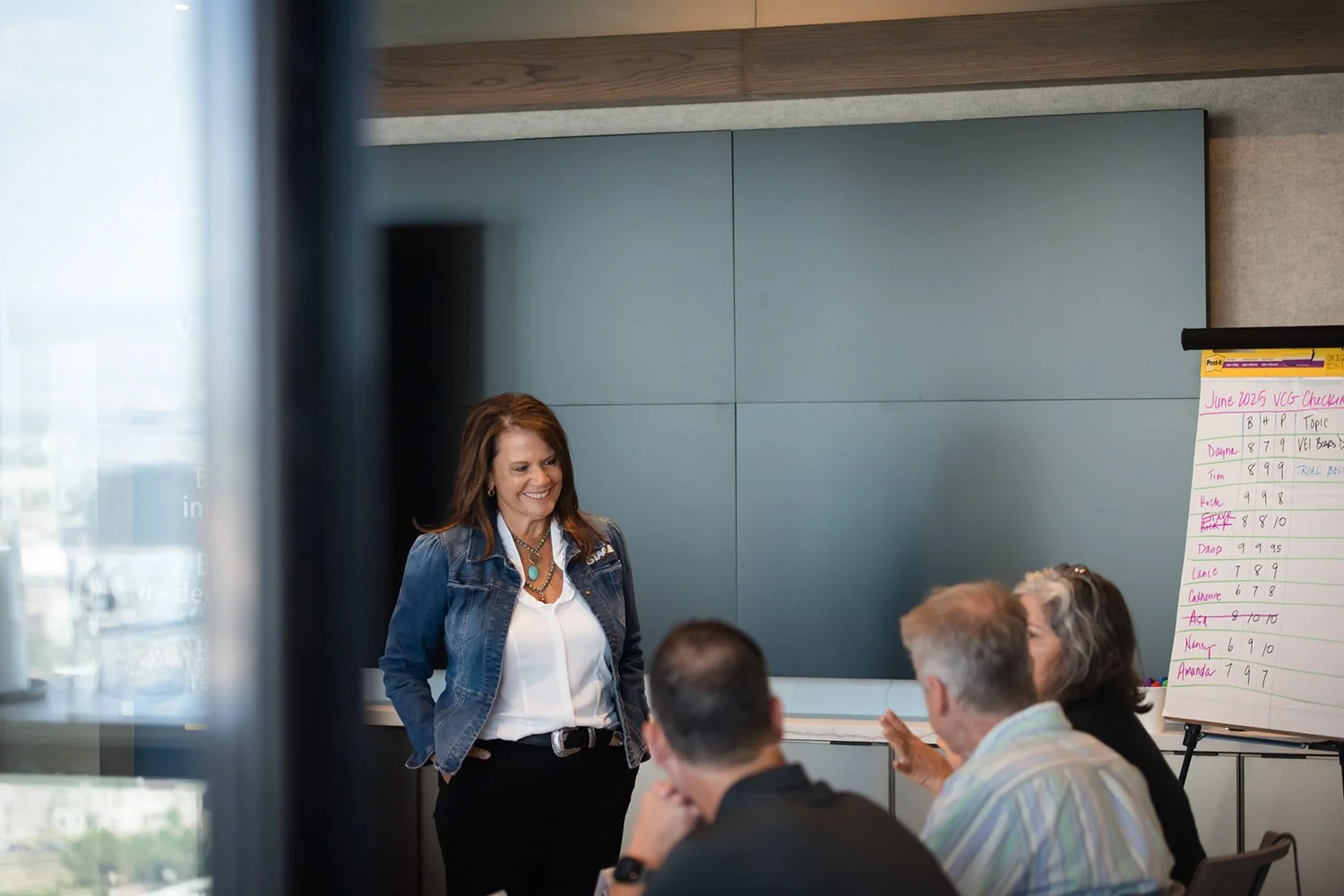
Something different happens when CEOs sit with other CEOs — not as competitors, not as advisors, but as peers.
The conversation slows down.
Questions get sharper.
Assumptions get examined instead of defended.
In the presence of peers who understand the weight of the role, leaders don’t have to posture. They can think.
Not to be agreed with — but to be challenged thoughtfully.
Not to be fixed — but to be sharpened.
This kind of peer environment doesn’t hand out answers.
It expands thinking.
Better Decisions Start in Better Rooms
Some of the most consequential decisions a CEO makes don’t come from certainty.
They come from clarity.
Clarity often emerges when:
A leader hears a question they hadn’t considered
A pattern is named that felt invisible before
A familiar problem is reframed through someone else’s experience
The value of a peer group isn’t consensus.
It’s contrast.
It helps leaders see where they’re too close, too invested, or too stuck in a single narrative.
The Longevity Tells a Story
When you notice that CEOs who join peer groups tend to stay for years — often longer than they stay in roles — it raises a quiet question:
What are they getting that they don’t want to lose?
It’s not novelty.
It’s not content.
It’s the ongoing benefit of being in a room where thinking improves over time, where trust compounds, and where leadership doesn’t have to be lonely.
A Different Way to Lead
Peer groups don’t replace experience, instinct, or accountability.
They strengthen them.
They create a rhythm of reflection in a role that rarely slows down.
They normalize asking better questions instead of pretending to have perfect answers.
They remind leaders that courage is often built in community.
In a leadership era defined by uncertainty, complexity, and pace, the most forward-thinking CEOs aren’t asking, “How do I do this alone?”
They’re asking, “Who helps me think better?”
Closing Reflection
Leadership has never required isolation — even if it once looked that way.
As the role of the CEO continues to evolve, so does the way leaders grow, decide, and sustain themselves.
For many, that evolution begins with a simple curiosity:
What would change if I didn’t have to think alone anymore?
Sometimes the most strategic move a leader can make
is choosing the room they think in.